
Annapurna Circuit Trek: 11 Days
Professionally guided Himalayan adventure with licensed local experts, altitude safety support, and breathtaking Annapurna landscapes.


Annapurna Circuit Trek: Trip Overview
A quick-reference overview of the itinerary, route highlights, altitude profile, and essential planning information for the Annapurna Circuit Trek.
-
Duration 11 Days
-
Trekking Days 7 Days
-
Max Altitude 5,416 m (Thorong La Pass)
-
Group Size 2 – 10 Trekkers
-
Difficulty Moderate to Challenging
-
Region Annapurna Conservation Area, Nepal
-
Best Season March–May & September – November
-
Start/End Point Kathmandu / Kathmandu
-
Accommodation Hotel | Tea House trekking


About the Annapurna Circuit Trek
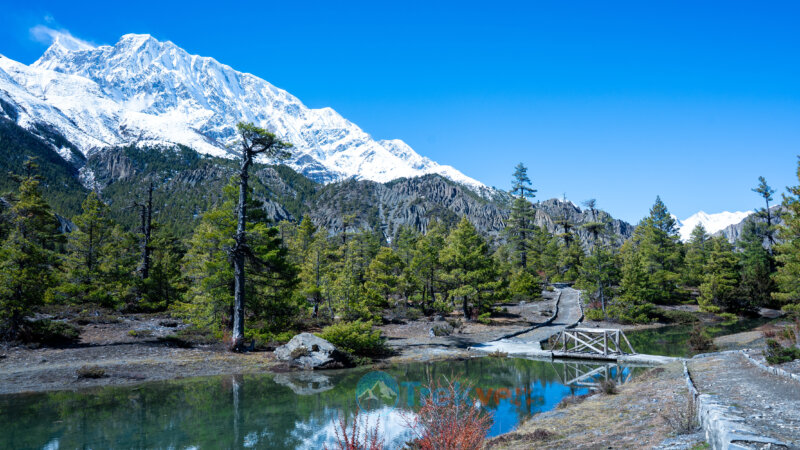
The Annapurna Circuit Trek is one of the most popular trekking routes in Nepal. During this journey, you will experience a wide variety of landscapes from lush green hills and massive Rocky Mountains to one of the deepest gorges in the world. Along the way, you will witness the beautiful lifestyle of local Himalayan communities and enjoy breathtaking views of towering snow-capped peaks.
Walking alongside the flowing Marsyangdi River, you will also come across charming apple farms, which are one of the highlights of this region. Ancient monasteries along the trail add a spiritual touch to the journey. The main highlight of the trek is crossing the Thorong La Pass (5,416 meters), one of the highest trekking passes in the world.
This trek is not just about mountains, it is also a wonderful opportunity to experience local culture, traditions, and authentic village life.
Arrival in Kathmandu (1,400m)
Upon your arrival at Tribhuvan International Airport in Kathmandu, our representative will warmly welcome you and transfer you to your hotel. After check-in, you can rest or explore the lively Thamel area. In the evening, there will be a short trek briefing where you will meet your guide.
Major Highlights of the Annapurna Circuit Trek
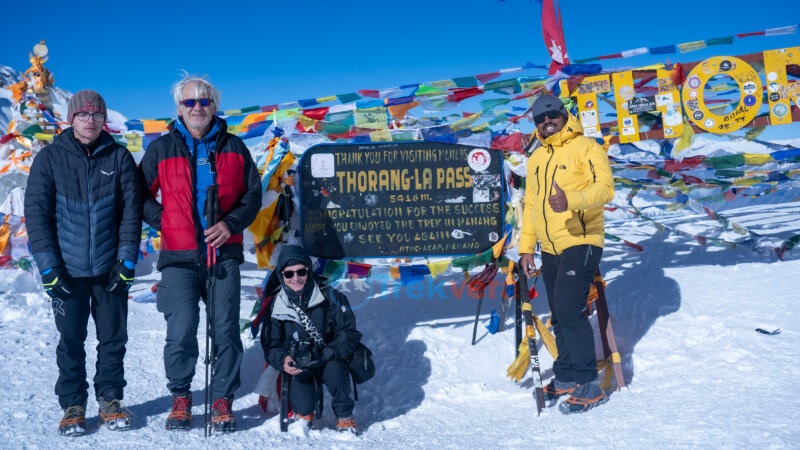
- Thorong La Pass (5,416m): The highest and most challenging point of the Annapurna Circuit Trek, offering breathtaking 360-degree panoramic views of the Annapurna and Dhaulagiri mountain ranges. From the pass, you can clearly witness Annapurna II, III, and IV, the Dhaulagiri range, Gangapurna, Tilicho Peak, and Manaslu Himal. The surrounding peaks of Khatung Kang and Yakawa Kang further enhance the beauty of this spectacular location.
- Muktinath Temple: An important pilgrimage site for both Hindus and Buddhists, famous for its 108 sacred water spouts and the eternal flame, which remains one of the major spiritual attractions of the region.
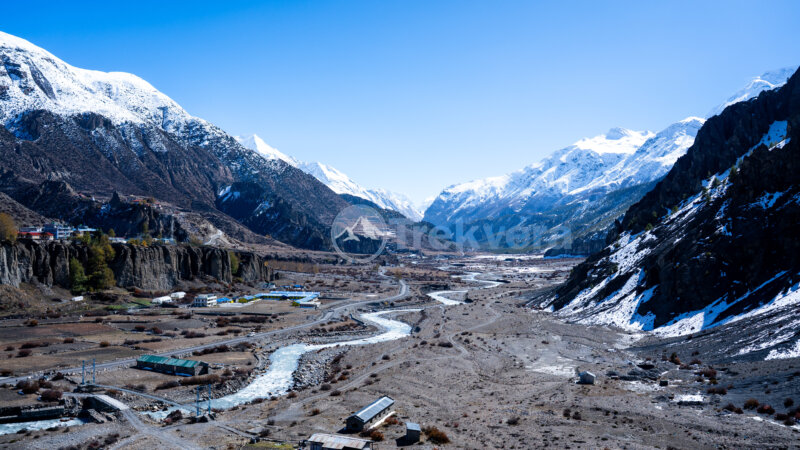
- Manang Valley: A beautiful high-altitude desert-like valley surrounded by magnificent Himalayan scenery. From here, trekkers can enjoy close-up views of Annapurna II, III, and Gangapurna, along with several stunning alpine lakes. The ancient monasteries and traditional Buddhist culture make the valley even more fascinating.
- Kali Gandaki Gorge: Trek through one of the deepest gorges in the world, which naturally separates the Annapurna and Dhaulagiri mountain ranges and offers dramatic landscapes throughout the journey.
- Upper Pisang & Ngawal Route: A scenic alternative high trail that provides wider Himalayan panoramas, beautiful landscapes, and opportunities to experience traditional mountain villages.
- Natural Hot Springs at Tatopani: After crossing Thorong La Pass, trekkers can relax and refresh themselves in the natural hot springs of Tatopani, which are known for soothing tired muscles and providing a comfortable rest stop.
- Marpha Village: A charming village in the Mustang region, well known for its apple orchards, traditional whitewashed houses, and unique local culture that visitors can closely experience.
- Cultural Diversity: The trek offers a remarkable cultural journey, starting from Hindu villages and gradually transitioning into Tibetan-influenced Buddhist communities filled with ancient monasteries, prayer flags, and traditional Himalayan lifestyles.
Annapurna Base Camp Trek Itinerary – Day by Day Guide
Show AllA complete daily breakdown for a safe, scenic, and well-paced Annapurna Circuit trek

Day 01: Drive from Kathmandu to Dharapani
-
 Accomodation: Tourist Standard Hotel
 -
 Meals: Lunch | Dinner
 -
 Elevation: ~1,860 m
 -
 Duration: 10–12 hours
Begin your Himalayan adventure with a scenic drive from Kathmandu to Dharapani via Besisahar, passing lush hills, terraced farms, and traditional mountain villages. Enjoy beautiful views of the Trishuli River on this classic Nepal trekking route.
Day 02: Trek from Dharapani to Chame
-
Accomodation: Lodge Hotel
-
Meals: Full Board
-
Elevation: 2,670 m
-
Duration: 5–6 hours
Start your trek along the beautiful Marsyangdi River, walking through peaceful forests and traditional Himalayan villages on the way to Chame. This scenic trail offers the perfect introduction to the classic Annapurna trekking experience.
Day 03: Chame to Pisang
-
Accomodation: Lodge Hotel
-
Meals: Full Board
-
Elevation: 3,300 m
-
Duration: 4–5 hours
Enjoy a breathtaking trek through apple orchards, riverside trails, and traditional Himalayan villages on the way to Upper Pisang. Marvel at stunning views of the Annapurna Range and experience local culture with an optional monastery visit and evening prayers.
Day 04: Pisang to Manang
-
Accomodation: Lodge Hotel
-
Meals: Full Board
-
Elevation: 3,540 m
-
Duration: 6–7 hours
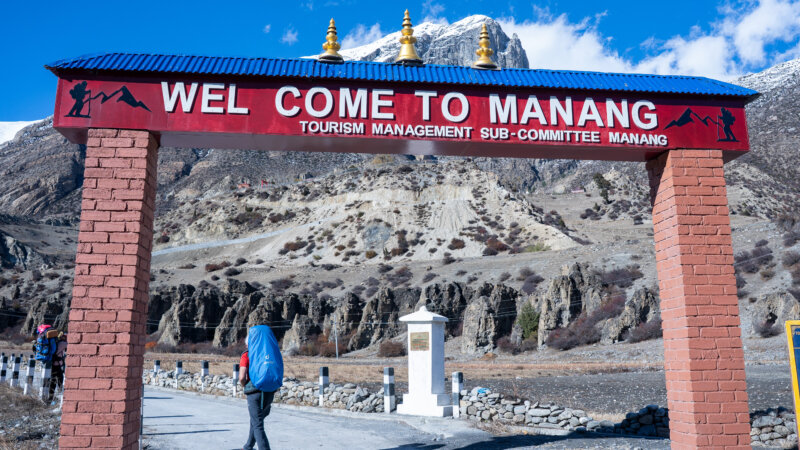
Experience the dramatic transition into the high Himalayas as green hills turn into rugged alpine landscapes on the way to Manang. Enjoy spectacular mountain panoramas and explore the largest village in the stunning Manang Valley.
Day 05: Acclimatization Day at Manang
-
Accomodation: Lodge Hotel
-
Meals: Full Board
-
Elevation: 3,540 m
-
Duration: 2–4 hours
This is a very important day to help your body adjust to the altitude. You can take a short hike to nearby viewpoints or visit Gangapurna Lake. If you are physically fit, you can even hike to Ice Lake, which may take around 7–10 hours round trip.
Day 06: Trek from Manang to Yak Kharka
-
Accomodation: Lodge Hotel
-
Meals: Full Board
-
Elevation: 4120 m
-
Duration: 4–5 hours
Continue your gradual ascent into the alpine landscapes of the Annapurna Circuit as forests fade into rugged mountain terrain on the way to Yak Kharka. Famous for its yak grazing pastures and stunning Himalayan scenery, this is a key acclimatization stop before crossing higher mountain passes.
Day 7: Yak Kharka to Thorong Phedi
-
Accomodation: Lodge Hotel
-
Meals: Full Board
-
Elevation: 4,540 m
-
Duration: 4–5 hours
Trek to Thorong Phedi, the final base camp before the legendary Thorong La Pass, and prepare for the most challenging yet rewarding day of the Annapurna Circuit Trek.
Day 8: Cross Thorong La Pass → Trek to Muktinath
-
Accomodation: Lodge Hotel
-
Meals: Full Board
-
Elevation: 5416 m
-
Duration: 8–9 hours
Cross the legendary Thorong La Pass, the highest point of the Annapurna Circuit, and enjoy unforgettable Himalayan views before descending to the sacred pilgrimage site of Muktinath.
Day 9: Drive from Muktinath to Pokhara
-
Accomodation: Lodge Hotel
-
Meals: Full Board
-
Elevation: 822 m
-
Duration: 6–7 hours
End your Annapurna Circuit adventure with a scenic drive to Pokhara via Jomsom and Tatopani, following the beautiful Kali Gandaki River. Relax in Tatopani’s natural hot springs before returning to the lakeside city of Pokhara.
Day 10: Rest day in Pokhara
-
Accomodation: Lodge Hotel
-
Meals: Full Board
-
Elevation: 1400 m
-
Duration: 6–7 hours
Relax and explore the beautiful lakeside city of Pokhara with boating on Phewa Lake, cozy cafés, and stunning mountain views. Celebrate the completion of your Himalayan adventure with a memorable farewell dinner and trekking team gathering.

Day 11: Pokhara to Kathmandu
-
Accomodation: Lodge Hotel
-
Elevation: 1350 M
-
Duration: 6–7 hours
Conclude your journey by returning to Kathmandu from Pokhara, either by scenic flight or road, taking home unforgettable memories and a rewarding Himalayan trekking experience.
Annapurna Circuit Trek Cost & package Inclusions
-
 International airport pickup and drop-off services.
-
Two night boutique hotel in Kathmandu with breakfast
-
One assistance guide will be provided above 7 people
-
An English-speaking professional trekking guide (including his salary, food, accommodation, and insurance).
-
Annapurna Conservation Area Permit (ACAP).
-
All necessary ground transportation by local bus/jeep (Kathmandu-Besshar-Dharapani by local jeep, Muktinath -Pokhara by Local bus, Pokhara – Kathmandu by Tourist bus).
-
The hotel to the bus station is transported by car or taxi.
-
Three meals a day during the trek (breakfast, lunch and dinner).
-
During the trek, seasonal fresh fruit.
-
Accommodation during the trek will be in tea houses or lodges on a twin-sharing basis.
-
Two nights accommodation in Pokhara.
-
Annapurna Circuit Trekking maps.
-
Medical supplies (first aid kit will be available).
-
All government tax and service fees.
-
 International flights
-
Nepal Visa Fees (15 Days-$30, 30 Days- $50, and 90 Days- $125).
-
Travel Insurance & Personal gear
-
Food and accommodation in Kathmandu or Pokhara.
-
Any kind of drink during the trek.
-
Personal expenses (phone calls, bar bills, battery charge, boiled water, laundry, hot shower, snacks, and Wi-Fi in the mountain).
-
Additional costs due to changes in the itinerary.
-
Private jeep if needed.
-
Porter cost: US$25 per day. One porter is provided for every two trekkers (maximum 20 kg carrying capacity).
-
Tips for guide and porters.
-
Any additional services not listed in the included section.
This cost and inclusion are based on standard group bookings. If you are not satisfied with the itinerary or package includes details, please contact us, we are happy to customize the trek according to your preferences.
Is the Annapurna Circuit Trek Suitable for Beginners?
The Annapurna Circuit Trek is definitely possible for beginners, but it is not an easy trek. You do not need any mountaineering experience, but you should have good physical fitness, mental determination, and be prepared for the challenges of high-altitude trekking. With proper preparation and an experienced guide, even first-time trekkers can successfully complete this adventure.
To fully enjoy the trek, you should be comfortable walking 6 to 8 hours a day. Above 3,500 meters, the air becomes thinner, and continuous uphill climbing can feel much more difficult. One of the biggest challenges of the trek is crossing Thorong La Pass, one of Nepal’s highest and most demanding trekking passes. On that day, trekkers must hike uphill for several hours and then descend for nearly five hours, which can be physically exhausting. Good stamina, strong determination, and confidence are very important.
How to Prepare
If you are planning this adventure, it is best to start preparing at least 6 to 8 weeks before arriving in Nepal.
- Improve your cardio fitness: Activities like running, cycling, and swimming help strengthen your heart and lungs.
- Build leg strength: Exercises such as squats and lunges help prepare your muscles for steep ascents and descents.
- Practice hiking with weight: Go on local hikes while carrying a backpack so your body gets used to walking with extra weight during the trek.
Villages and Local Life on the Annapurna Circuit trek
One of the most rewarding parts of the Annapurna Circuit Trek is the chance to experience the traditional villages and local lifestyle of the Himalayan region. As the trail passes through beautiful settlements like Chame, Pisang, Manang, Marpha, and Kagbeni, trekkers get a close look at the daily lives of the Gurung, Thakali, and Tibetan-influenced communities. Stone houses, ancient monasteries, colorful prayer flags, and terraced farms create a unique mountain atmosphere along the route. Local people are known for their warm hospitality, and staying in family-run teahouses gives trekkers an opportunity to enjoy homemade Nepali meals and learn about local culture, traditions, and customs. From farmers working in the fields to yak caravans moving through the trails, the Annapurna Circuit offers not only stunning mountain scenery but also an unforgettable cultural experience.
Annapurna Circuit Trek: Route & Map
The Annapurna Circuit Trek follows one of Nepal’s most famous long-distance trekking routes, circling the massive Annapurna mountain range through diverse landscapes and traditional Himalayan villages. The journey usually begins from Besisahar or Dharapani and gradually ascends through villages like Chame, Pisang, and Manang before reaching the highest point of the trek, Thorong La Pass (5,416 meters).
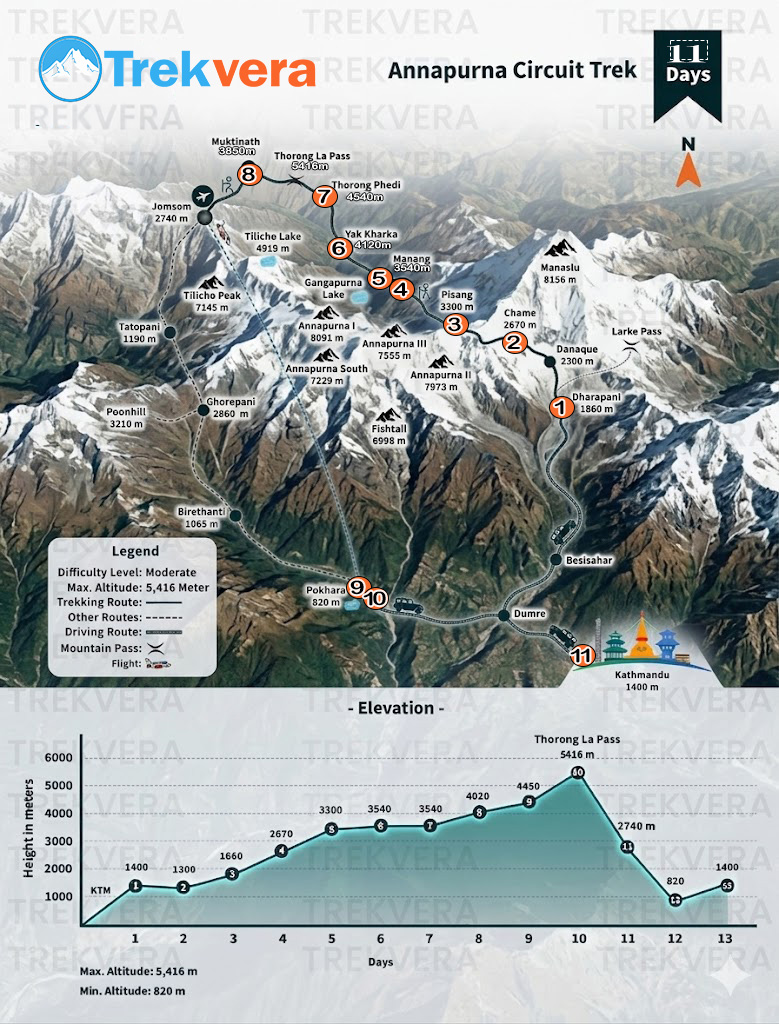
After crossing the pass, the trail descends toward the sacred pilgrimage site of Muktinath and continues through the beautiful Mustang region, including villages like Jomsom and Marpha. Along the route, trekkers experience dramatic changes in scenery, from green forests and waterfalls to dry alpine valleys and snow-covered mountains. The Annapurna Circuit Trek map highlights important acclimatization stops, side trails, mountain viewpoints, rivers, suspension bridges, and traditional settlements, helping trekkers navigate this incredible Himalayan adventure safely and comfortably.
Accommodation & Food Along the Annapurna Circuit Trek
The Annapurna Circuit Trek is considered one of the finest teahouse trekking experiences in Nepal, offering a wonderful combination of comfort, hospitality, and authentic Himalayan lifestyle. Along the trekking route, especially in popular villages and tourist-friendly settlements, trekkers can find well-managed teahouses and lodges built to accommodate both domestic and international travelers. Many of these teahouses provide comfortable rooms, warm dining halls, attached or private bathrooms in some locations, Wi-Fi facilities, and a welcoming atmosphere where trekkers can relax after long walking days.
As you gradually ascend toward higher elevations and remote sections near Thorong La Pass, accommodation facilities become simpler and more basic. This is mainly due to the harsh geography and limited accessibility of the high Himalayan region. However, staying in these remote mountain lodges allows trekkers to experience the true lifestyle of the Himalayan people and enjoy the peaceful beauty of the mountains in a more authentic way.
Food along the Annapurna Circuit is specially designed to provide the energy needed for long and physically demanding trekking days. Dal Bhat, the traditional Nepali meal consisting of rice, lentil soup, vegetables, and pickles, is the most common and reliable food available throughout the trail. It is highly recommended for trekkers because it provides balanced nutrition and unlimited energy for hiking.
Besides Dal Bhat, trekkers can also enjoy a wide variety of foods including pizza, burgers, pasta, noodles, pancakes, soups, fried rice, Tibetan bread, and several types of desserts and bakery items. In popular trekking villages, menus are surprisingly diverse, allowing trekkers to enjoy both local and international meals even in remote Himalayan areas.
As altitude increases, food prices also gradually rise because all supplies must be transported by porters, mules, or yaks into the mountain regions. In higher elevations, choosing vegetarian meals is generally recommended for better hygiene, easier digestion, and overall health during the trek. Drinking plenty of water and maintaining a balanced diet are also important for proper acclimatization and maintaining energy throughout the journey.
Flora, Fauna & Conservation Areas
The Annapurna Circuit Trek lies entirely within the Annapurna Conservation Area, which is the largest protected conservation region in Nepal. This incredible trekking route offers a remarkable variety of landscapes, ecosystems, and biodiversity that change dramatically as the elevation increases.
In the lower regions, trekkers pass through lush subtropical forests, green hills, terraced farmlands, and beautiful rhododendron forests that bloom brightly during spring. As the trail climbs higher, the landscape gradually transforms into alpine meadows, rocky mountain terrain, dry trans-Himalayan valleys, and high-altitude desert-like environments near Mustang and Thorong La.
The Annapurna region is also home to many important Himalayan wildlife species. Trekkers may encounter Himalayan tahr, musk deer, blue sheep (naur), and numerous species of birds throughout the route. Depending on the season and altitude, the flora and fauna change significantly, making the Annapurna region one of Nepal’s richest areas for natural biodiversity and ecological diversity.
The Annapurna Conservation Area is protected through sustainable tourism and environmentally responsible conservation practices. Trekkers are encouraged to minimize plastic waste, respect wildlife habitats, and support local communities by staying in locally operated teahouses and purchasing local products whenever possible.
Responsible trekking practices play a vital role in preserving the fragile Himalayan ecosystem for future generations. These conservation efforts not only protect the natural beauty, forests, wildlife, and biodiversity of the Annapurna region, but also help support the sustainable livelihoods and cultural traditions of local mountain communities living along the trekking route.

Annapurna Circuit Trek: 11 Days FAQs
Find answers to the most common questions about the Annapurna Circuit Trek: 11 Days, including permits, itinerary, cost, and difficulty.
How long is the Annapurna Circuit Trek?
The trek usually takes 10–18 days depending on your itinerary and available time.
How expensive is the Annapurna Circuit Trek?
The cost depends on the duration, services, transportation, and group size. Generally, it is considered a moderately priced trek.
How difficult is the Annapurna Circuit Trek?
It is a moderate trek suitable for physically fit people. Previous trekking experience is helpful but not compulsory.
What is the best time for the Annapurna Circuit Trek?
Spring (March–May) and autumn (September–November) are the best seasons for clear weather and beautiful mountain views.
Are hospitals or medical facilities available during the trek?
Basic health posts are available along the trail, and there is a hospital in Manang. Carrying a personal first-aid kit is recommended.
What happens in case of emergency during the trek?
Experienced guides and trekking staff will provide immediate support and coordinate with the company if needed.
What food and accommodation are available during the trek?
You will stay in tea houses or lodges. Foods like Dal Bhat, soup, noodles, pasta, pizza, coffee, and bakery items are available.
Why is a guide important for the trek?
A licensed guide makes your journey safer, easier, and more informative, especially for first-time trekkers.
Is drinking water safe?
Water from taps and natural sources should be purified before drinking. Water purification tablets or filters are recommended.
Is travel insurance necessary?
Insurance is not compulsory but highly recommended for emergencies and rescue situations.
Can I get a hot shower during the trek?
Most tea houses offer hot showers, but facilities may be limited at higher altitudes.
Is the trek safe for solo or female trekkers?
Yes, the Annapurna Circuit is considered safe and popular for solo and female trekkers.
Do I need permits for the trek?
Yes, you need ACAP (Annapurna Conservation Area Permit).
Can I bring a drone?
Drone use requires permission from the concerned government authorities in Nepal.
What currency can I bring to Nepal?
You can bring any government-approved foreign currency and exchange it in Nepal.
How much should I tip guides and porters?
Tipping is appreciated and depends on your satisfaction and budget.
How crowded are the trekking trails?
The trails can be busy during peak trekking seasons.
Is the internet available during the trek?
Most lodges provide WiFi, and mobile data also works in many areas.
What are the bathrooms like during the trek?
Bathrooms are basic and vary depending on the location.
How much extra money should I carry?
Carry extra cash for personal expenses like snacks, WiFi, hot showers, charging, and drinks.
Why Trekvera for Annapurna Circuit trek?
Choose us for expert-guided, safe, and hassle-free trekking experiences with 24/7 support, personalized trip briefing, and easy booking worldwide.
-
Local Expert Guides
Local, licensed expert guides with strong route knowledge and highly recommended by many travelers for safe and authentic trekking experiences.
-
24/7 Support Team
Our support team is available 24 hours a day, 7 days a week via email to assist you.
-
Free Private Airport Pickup & Drop
Enjoy a seamless travel experience with complimentary private airport transfer services.
-
Free Cancellation & Reschedule
Our tour package includes free cancellation or reschedule if plans change.
